<?xml version="1.0" encoding="utf-8"?><feed xmlns="http://www.w3.org/2005/Atom" ><generator uri="https://jekyllrb.com/" version="3.10.0">Jekyll</generator><link href="https://anaghpathak.com/feed.xml" rel="self" type="application/atom+xml" /><link href="https://anaghpathak.com/" rel="alternate" type="text/html" /><updated>2026-08-05T06:02:09+00:00</updated><id>https://anaghpathak.com/feed.xml</id><title type="html">Neuromath</title><subtitle>A minimal Jekyll website hosted on GitHub Pages.</subtitle><entry><title type="html">First Muscle Up!</title><link href="https://anaghpathak.com/2024/02/27/First-Muscle-Up/" rel="alternate" type="text/html" title="First Muscle Up!" /><published>2024-02-27T00:00:00+00:00</published><updated>2024-02-27T00:00:00+00:00</updated><id>https://anaghpathak.com/2024/02/27/First-Muscle-Up</id><content type="html" xml:base="https://anaghpathak.com/2024/02/27/First-Muscle-Up/"><![CDATA[<h2 id="i-finally-got-my-first-muscle-up-">I Finally Got My First Muscle-Up! 🎉</h2>

<p>If you’re working toward yours, this post might help. Here’s some background on my journey:</p>

<iframe width="560" height="315" src="https://www.youtube.com/embed/L1BXN0K13Pc" frameborder="0" allowfullscreen=""></iframe>

<h3 id="my-journey-">My Journey 🚀</h3>

<p>I had been doing <strong>standard pull-ups consistently for over a year</strong> and could hit <strong>14 clean reps</strong> at the time of this recording.</p>

<p>Over the past six months, I <strong>lost a considerable amount of weight</strong> while maintaining my pulling strength.</p>

<p>Surprisingly, I <strong>wasn’t hyper-focused</strong> on achieving a muscle-up. It happened on a <strong>cardio day</strong> when I decided to throw in some pull-ups as an afterthought.</p>

<p>That said, in the preceding weeks, I had started incorporating:</p>
<ul>
  <li><strong>Explosive chest-to-bar pull-ups</strong></li>
  <li><strong>Ground-assisted straight bar dips</strong></li>
</ul>

<p>These small but effective <strong>sub-components of the muscle-up</strong> made all the difference.</p>

<hr />

<h2 id="key-takeaways-">Key Takeaways 📌</h2>

<p>Muscle-ups require both <strong>strength</strong> and <strong>technique</strong>. A strong pull-up is essential but <strong>not enough on its own</strong>.</p>

<p>The key is <strong>learning to use your entire kinetic chain</strong>—not just your back—to generate vertical momentum.</p>

<h3 id="-how-to-train-for-a-muscle-up">🔑 How to Train for a Muscle-Up:</h3>
<p>✅ <strong>Break the movement into sub-movements</strong> and practice them deliberately.<br />
✅ Work on <strong>explosive pull-ups, transition drills, and straight bar dips</strong> separately.<br />
✅ <strong>Train your brain</strong> to time the movement correctly—initiate the pull <strong>right after reversing your swing</strong> to maximize momentum.<br />
✅ As with most calisthenics skills, <strong>the leaner you are, the easier it gets</strong>.</p>

<hr />

<h2 id="whats-next-">What’s Next? 🎯</h2>

<p>Now that I’ve unlocked my first rep, the goal is to <strong>make it repeatable</strong>.</p>

<p>Over the next month, I’ll aim for <strong>three consecutive muscle-ups in a row</strong>.</p>

<p>Let’s see how it goes! 💪🔥</p>]]></content><author><name></name></author><category term="physical culture" /><summary type="html"><![CDATA[I Finally Got My First Muscle-Up! 🎉]]></summary></entry><entry><title type="html">Chicken and egg - Science or engineering first ?</title><link href="https://anaghpathak.com/2021/01/17/Chicken-and-egg-Science-or-engineering-first/" rel="alternate" type="text/html" title="Chicken and egg - Science or engineering first ?" /><published>2021-01-17T00:00:00+00:00</published><updated>2021-01-17T00:00:00+00:00</updated><id>https://anaghpathak.com/2021/01/17/Chicken-and-egg-Science-or-engineering-first</id><content type="html" xml:base="https://anaghpathak.com/2021/01/17/Chicken-and-egg-Science-or-engineering-first/"><![CDATA[<p>Many scientific purists argue that modern engineering inventions stem directly from science, suggesting that scientific theory is essential and must always precede invention.</p>

<p>Yet, a closer look at history reveals a far more complex, non-linear relationship between science and engineering. For instance, the invention of the wheel predates Newton’s laws of motion by millennia. Similarly, ancient marvels like the Persian water wheel and the sophisticated docks of the Indus Valley thrived long before their scientific principles were formally understood.</p>

<p>In fact, such examples imply that engineering often leads, with scientific theories arriving later to explain the underlying principles.</p>

<p>Could we be witnessing a similar dynamic in neuroscience? Might AI breakthroughs pave the way for neuroscience to follow?</p>]]></content><author><name></name></author><category term="biology" /><category term="neuroscience" /><category term="AI" /><category term="deep-learning" /><summary type="html"><![CDATA[Many scientific purists argue that modern engineering inventions stem directly from science, suggesting that scientific theory is essential and must always precede invention.]]></summary></entry><entry><title type="html">Neuroscience needs an AlphaFold</title><link href="https://anaghpathak.com/2020/12/03/Neuroscience-needs-an-AlphaFold/" rel="alternate" type="text/html" title="Neuroscience needs an AlphaFold" /><published>2020-12-03T00:00:00+00:00</published><updated>2020-12-03T00:00:00+00:00</updated><id>https://anaghpathak.com/2020/12/03/Neuroscience-needs-an-AlphaFold</id><content type="html" xml:base="https://anaghpathak.com/2020/12/03/Neuroscience-needs-an-AlphaFold/"><![CDATA[<p>The recent news of the success of Google’s AI platform-AlphaFold2- in predicting protein structure with unprecedented accuracy has electrified the field of biology and renewed interest in the application of deep-learning in discovery science. By predicting, to a great accuracy, the relationship of amino acid sequences and the 3D geometry of the resulting protein, google has made way for the manipulation of the bio-molecular world at an unprecedented scale.</p>

<p>Alongside, the demonstration has drawn attention to a broad class of biological problems- the structure-function mapping. Biological systems execute their myriad functions by possessing structures that can manipulate the environment in specific ways. Neuroscience, for example, has its own version of the structure-function problem. In the case of the brain, the structure corresponds to the ordered, hierarchical organization of neurons and the function relates to the correlations of activity patterns, most typically measured as BOLD activations.</p>

<p>As with proteins, the structure-function problem in neuroscience is complicated by the mind-bogglingly non-linear and networked nature of interaction between neurons. This fact can be gauged from the observation that SC explains, at best, only about half of the variance in FC. This discrepancy is further widened in case of functional connections between areas that lack any direct structural connectivity.</p>

<p>Ofcourse, understanding the link between SC and FC at the individual level has important consequences for the treatment of disease, many of which manifest as impairments in functional connections between brain areas.</p>

<p>So can we have a neuroscience equivalent of Alpha Fold ?</p>

<p>References:</p>

<p>Suárez, L. E., Markello, R. D., Betzel, R. F., &amp; Misic, B. (2020). Linking structure and function in macroscale brain networks. Trends in Cognitive Sciences.</p>]]></content><author><name></name></author><category term="biology" /><category term="neuroscience" /><category term="AI" /><category term="deep-learning" /><summary type="html"><![CDATA[The recent news of the success of Google’s AI platform-AlphaFold2- in predicting protein structure with unprecedented accuracy has electrified the field of biology and renewed interest in the application of deep-learning in discovery science. By predicting, to a great accuracy, the relationship of amino acid sequences and the 3D geometry of the resulting protein, google has made way for the manipulation of the bio-molecular world at an unprecedented scale.]]></summary></entry><entry><title type="html">Neural Cross frequency coupling</title><link href="https://anaghpathak.com/2020/04/05/Neural-Cross-frequency-coupling/" rel="alternate" type="text/html" title="Neural Cross frequency coupling" /><published>2020-04-05T00:00:00+00:00</published><updated>2020-04-05T00:00:00+00:00</updated><id>https://anaghpathak.com/2020/04/05/Neural-Cross-frequency-coupling</id><content type="html" xml:base="https://anaghpathak.com/2020/04/05/Neural-Cross-frequency-coupling/"><![CDATA[<p>Recent years have seen an explosion in articles that claim to have ‘discovered’ novel cross-frequency interactions in different parts of the brain under various task conditions. While the enterprise is not flawed in and of itself, many signal processing constraints make reliable estimation of cross-frequency interactions a vexing task, frought with methodological pitfalls. One such pitfall is the implicit(and flawed) assumption that all neural waveforms are inherently sinusoidal( sin, cos and linear mixtures thereof), when in reality, neural time series display all kinds of complex, non-sinusoidal waveforms.</p>

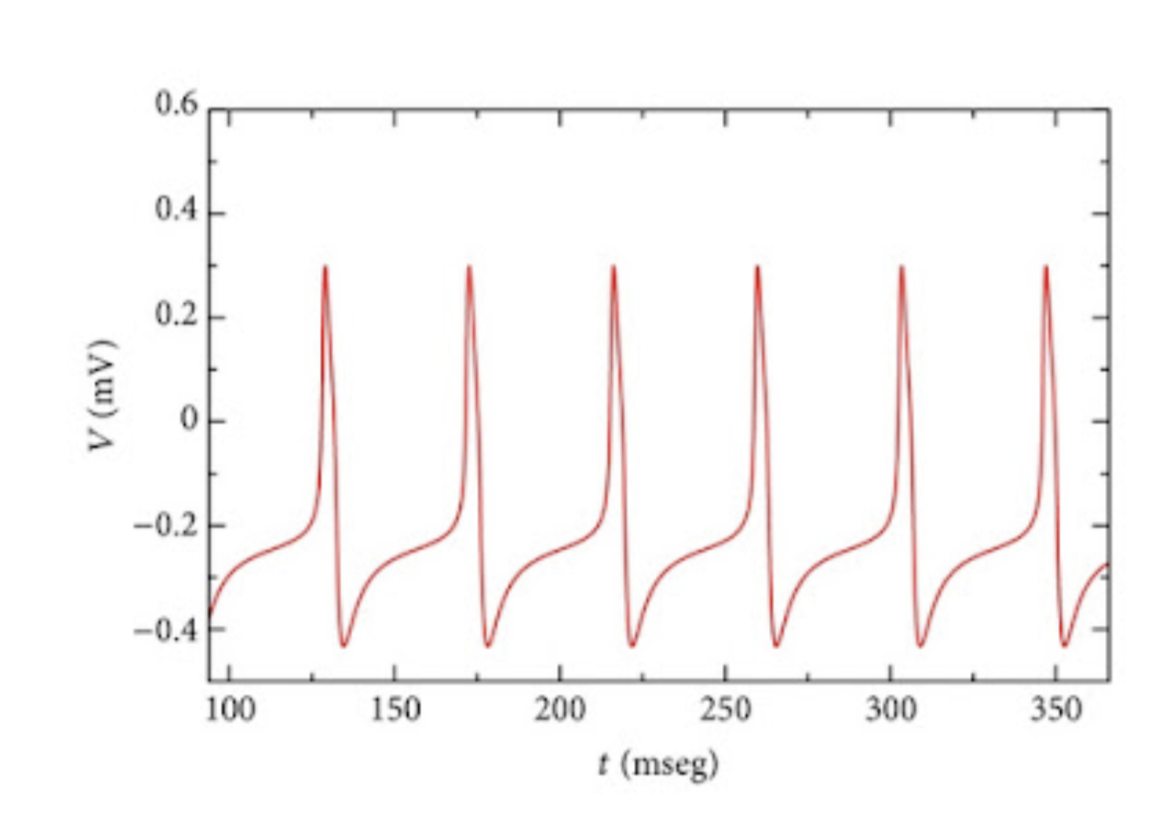
<p>The fact that most neural oscillations are not perfect sinusoids should be hardly surprising. Afterall, what we see as a neural trace is really the outcome of a high dimensional dynamical process. One mechanism through which an oscillation emerges in such systems is through the creation of a limit cycle. Therefore, an oscillatory waveform corresponds to the shape of a limit cycle in the phase space.  For example, the following figure represents the spike morphology of the Morris-Lecar neuron-</p>

<figure>
  <img src="/assets/images/fig1.png" alt="Description of image" />
  <figcaption>Figure 1.</figcaption>
</figure>

<p>This point can be further explored using the Van Der Pol oscillator, which is a prototypical non-linear limit cycle oscillator. The following equations correspond to the dynamics of the VdP oscillator-</p>

\[\ddot{x} - \mu(1-\alpha x - x^{2})\dot{x} + kx = 0\]

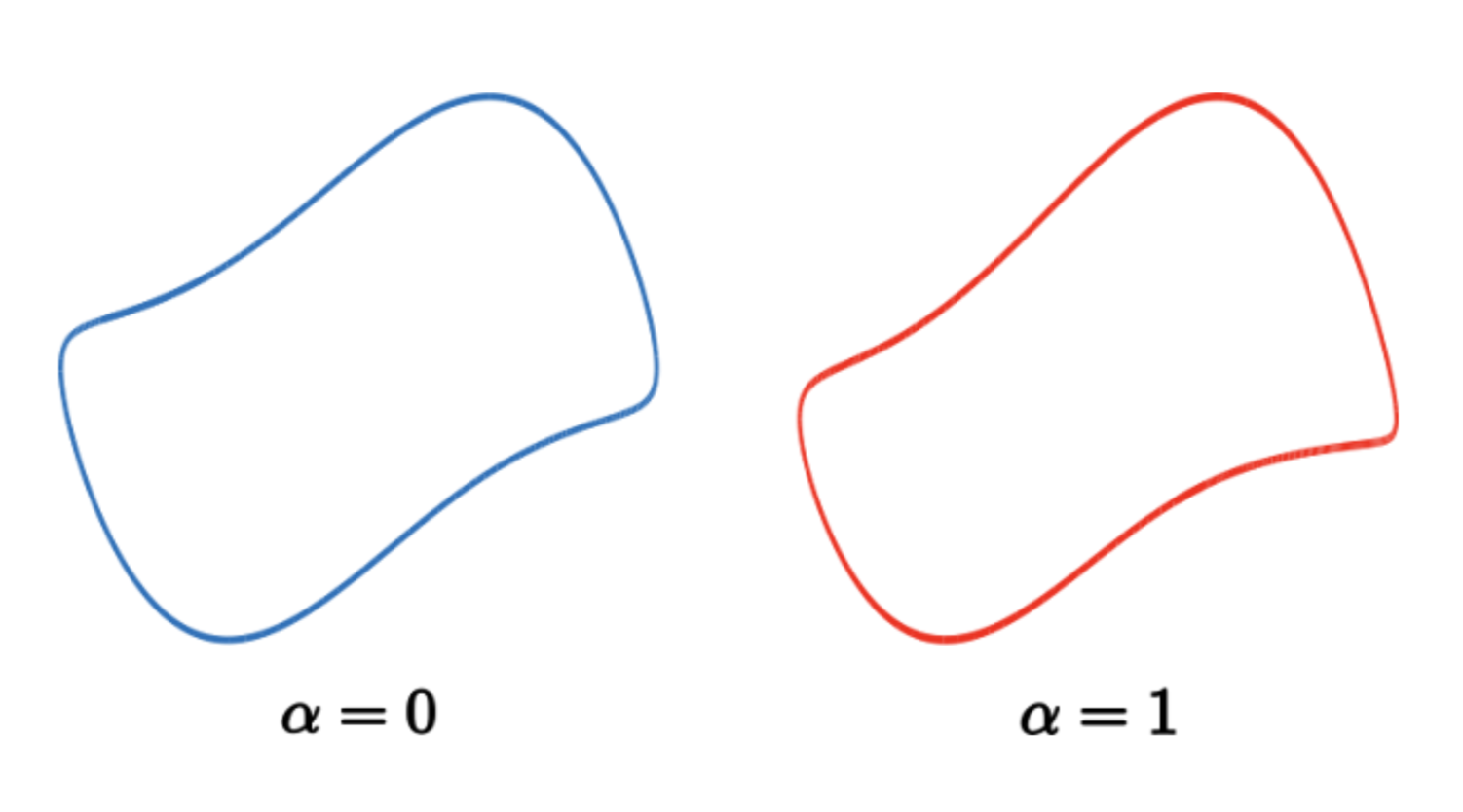
<p>Reducing the 2nd order differential equation into a set of coupled first order differential equations lets us solve the system numerically. Just like the morris-lecar equations, the VdP system possesses a limit cycle which deviates substantially from a perfect sinusoid. The parameter $\alpha$ is an interesting one. By changing $\alpha$ we can change the shape of the resulting limit cycle like so -</p>

<figure>
  <img src="/assets/images/fig2.png" alt="Description of image" />
  <figcaption>Figure 2.</figcaption>
</figure>

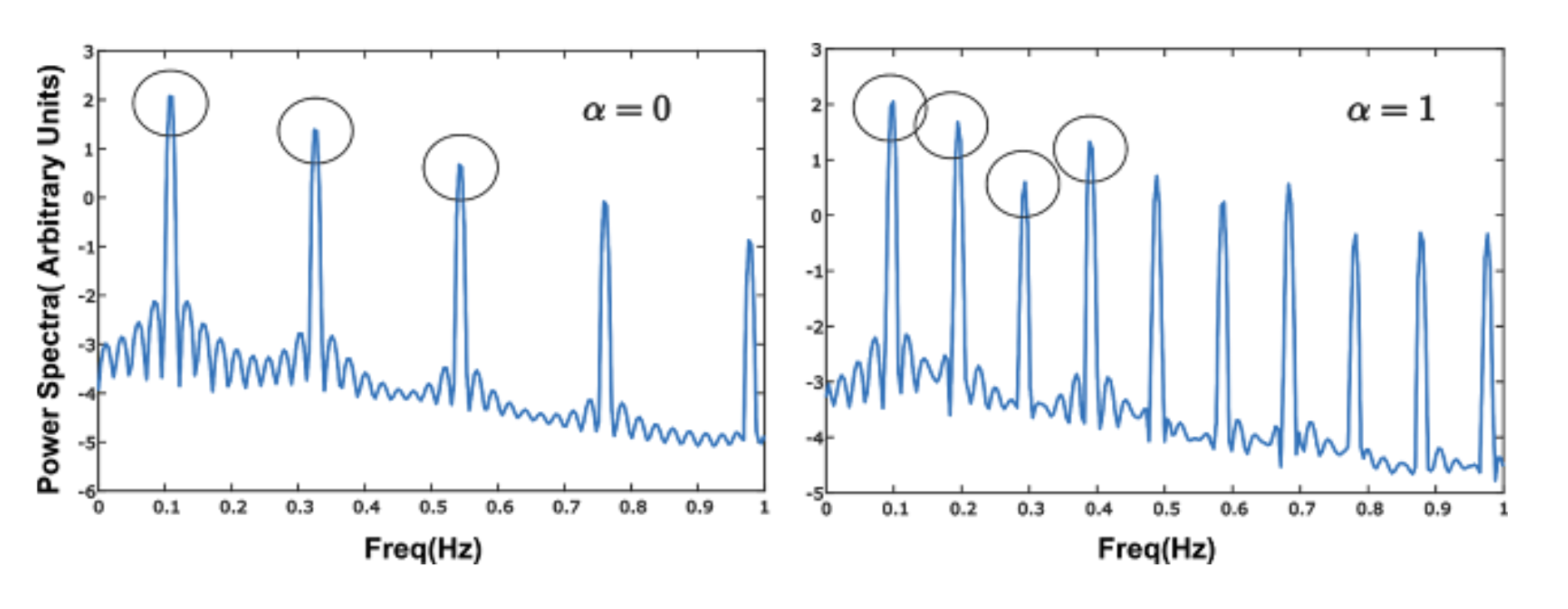
<p>Following is the power spectra of the resulting time series -</p>

<figure>
  <img src="/assets/images/fig3.png" alt="Description of image" />
  <figcaption>Figure 3. suggests that the symmetrical limit cycle($\alpha = 0$) yields odd harmonics only whereas the asymmetric limit cycle($\alpha =1$) possesses integral harmonics.</figcaption>
</figure>

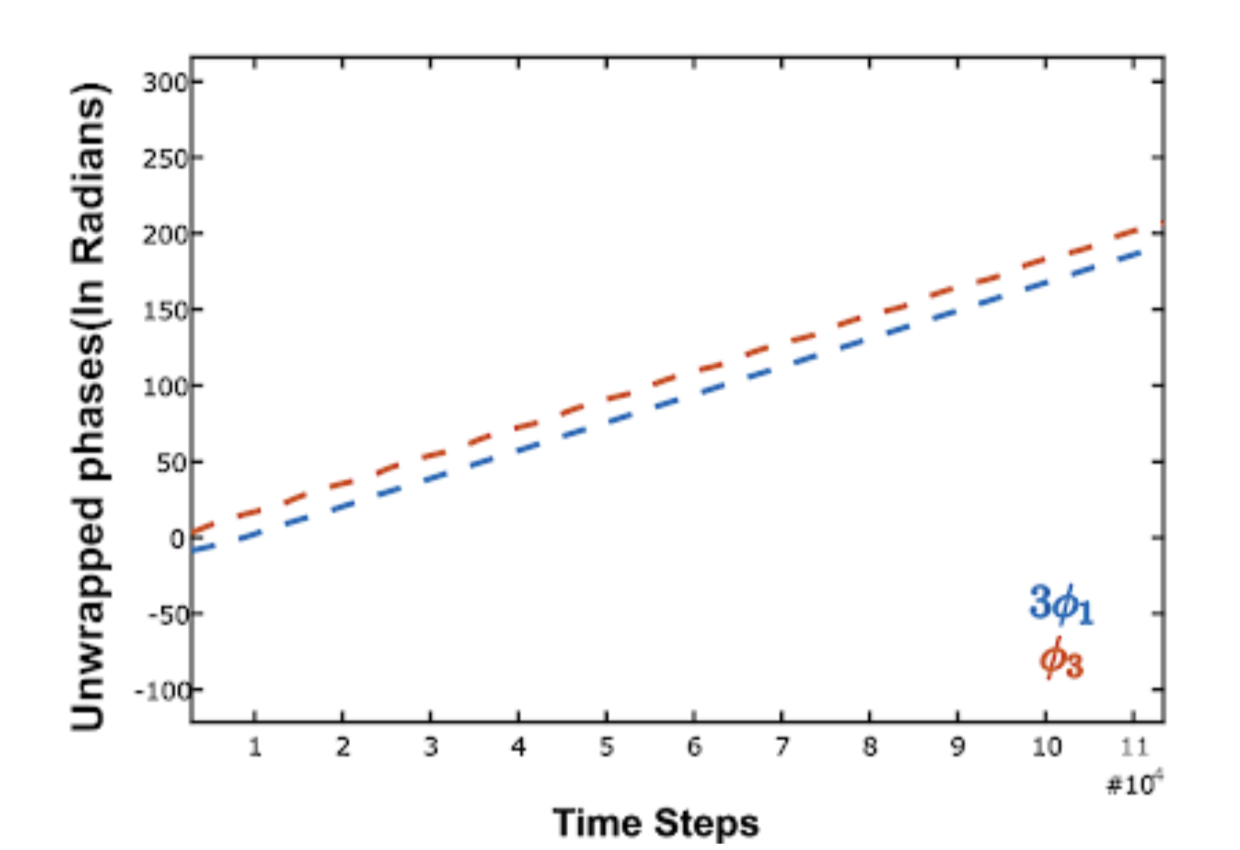
<p>Interestingly, there exists a well-defined relationship between the phases of the harmonics. This relationship can be quantified using the standard technique of bandpass filtering the signal in order to obtain time-series corresponding to individual harmonics and then using the hilbert transform to extract phases-</p>

<figure>
  <img src="/assets/images/fig4.png" alt="Description of image" />
  <figcaption>Figure 4.</figcaption>
</figure>

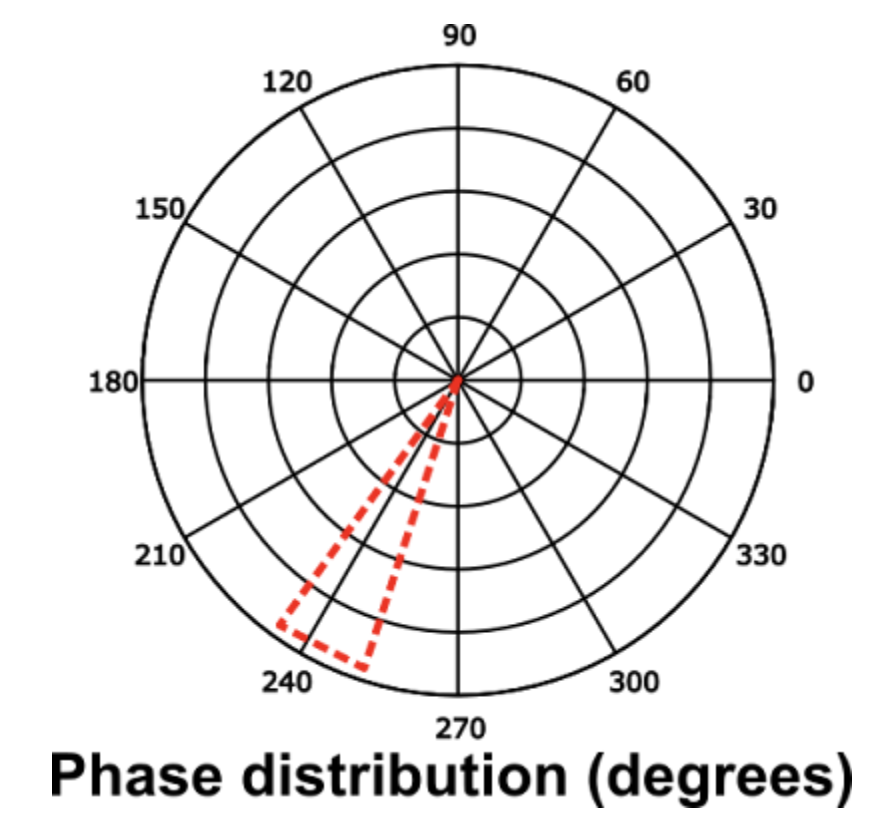
<p>Basically, in our example the oscillator frequency displays a phase locking with its $n^{th}$ harmonic. This type of coupling is also referred as n:m phase locking and has been observed in diverse natural phenomenon. The extent of the coupling can be quantified by studying the statistics of the phase difference using a circular phase histogram-</p>

<figure>
  <img src="/assets/images/fig5.png" alt="Description of image" />
  <figcaption>Figure 5.</figcaption>
</figure>

<p>As can be seen, the phase differences cluster in a particular direction instead of being uniformly distributed.</p>]]></content><author><name></name></author><category term="biology" /><category term="tutorial" /><category term="neuroscience" /><summary type="html"><![CDATA[Recent years have seen an explosion in articles that claim to have ‘discovered’ novel cross-frequency interactions in different parts of the brain under various task conditions. While the enterprise is not flawed in and of itself, many signal processing constraints make reliable estimation of cross-frequency interactions a vexing task, frought with methodological pitfalls. One such pitfall is the implicit(and flawed) assumption that all neural waveforms are inherently sinusoidal( sin, cos and linear mixtures thereof), when in reality, neural time series display all kinds of complex, non-sinusoidal waveforms.]]></summary></entry><entry><title type="html">Delhi’s Air IQ</title><link href="https://anaghpathak.com/2020/03/29/Delhi-Air-IQ/" rel="alternate" type="text/html" title="Delhi’s Air IQ" /><published>2020-03-29T00:00:00+00:00</published><updated>2020-03-29T00:00:00+00:00</updated><id>https://anaghpathak.com/2020/03/29/Delhi-Air-IQ</id><content type="html" xml:base="https://anaghpathak.com/2020/03/29/Delhi-Air-IQ/"><![CDATA[<p>Delhi is the now the most polluted city in the world. During a particularly foul spell of air pollution I decided to make some forays into data analysis and in the process, stumbled upon some interesting insights. As always, it starts withs a histogram</p>

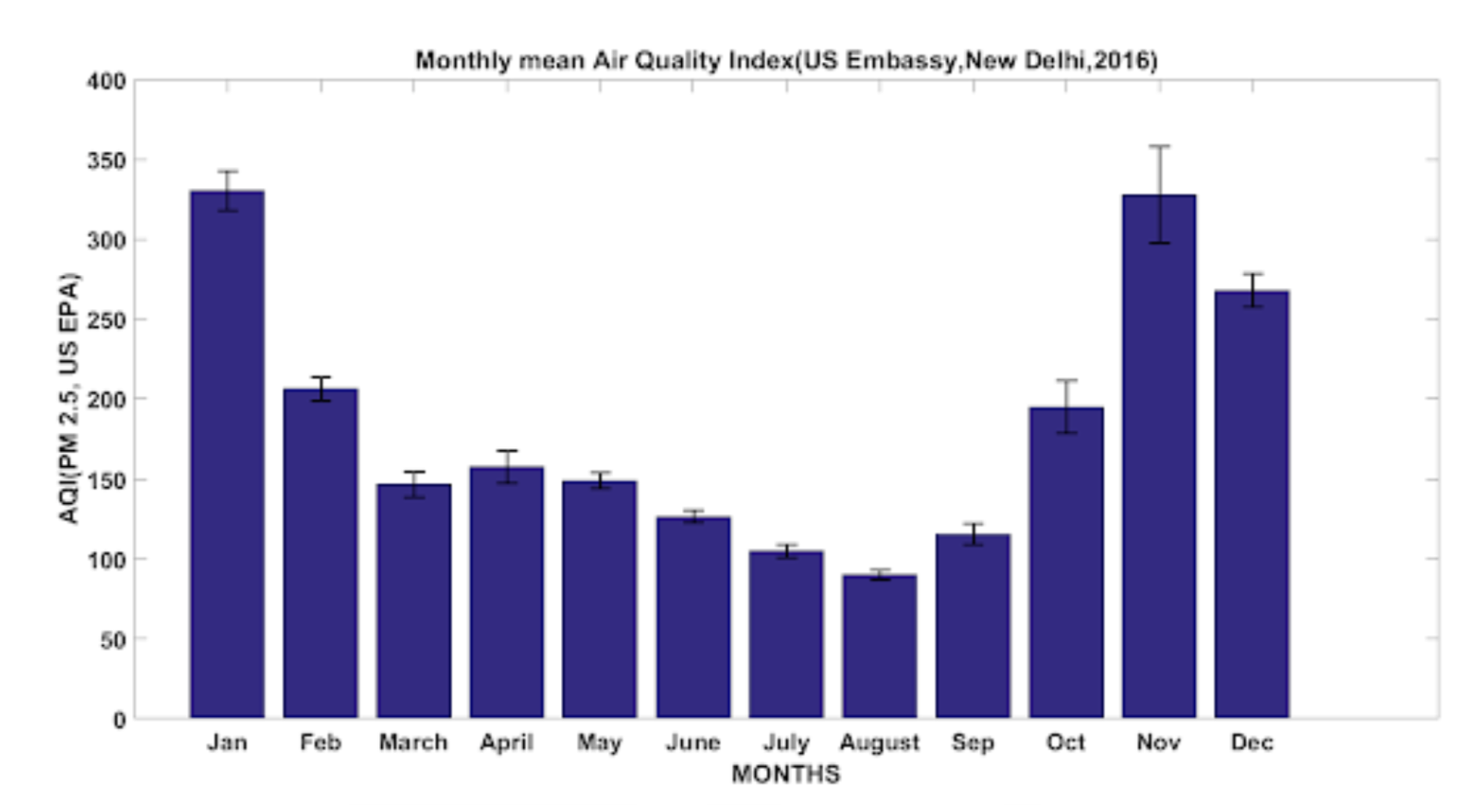
<figure>
  <img src="/assets/images/DelhiPollution/f1.png" alt="Description of image" />
  <figcaption>Figure 1.</figcaption>
</figure>

<p>Figure 1.  confirms what common people know from lived experience; the AQI is at its best in the monsoon months July-September, with August being the cleanest. 
The city’s air is at its worst in the winter months November-January- though surprisingly, there is a small but marked improvementin air quality in December before 
plummeting again to November levels in January. This could possibly be the effect of thermal inversion.</p>

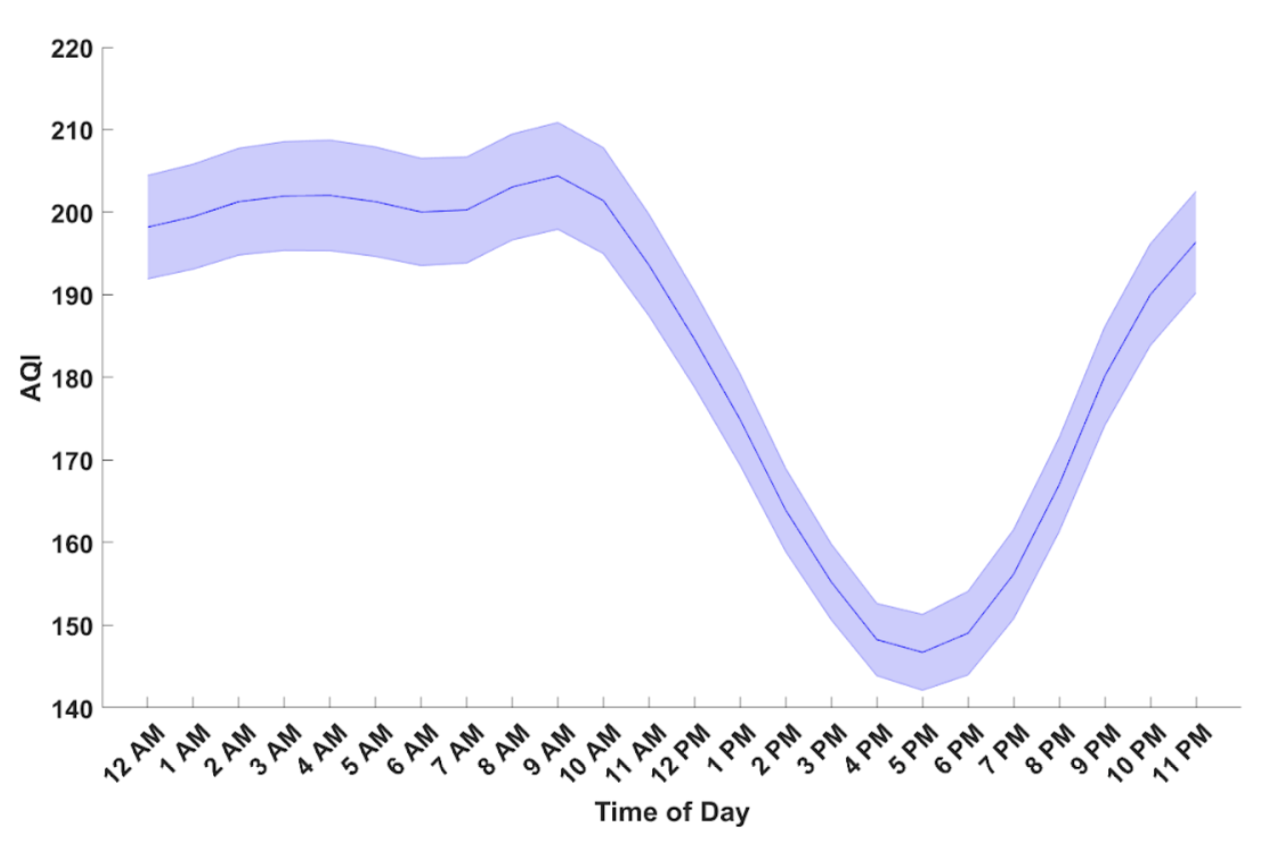
<figure>
  <img src="/assets/images/DelhiPollution/f2.png" alt="Description of image" />
  <figcaption>Figure 2.</figcaption>
</figure>

<p>Figure 2. Indicates that the cleanest AQI is to be found in the evening from 4-6 PM. This may run counter to the intuitions of some. For example, a poll conducted by smart air found that most respondents believed the air to be the cleanest in the night.</p>

<p>For more see - https://smartairfilters.com/en/blog/when-is-pm2-5-the-lowest/</p>

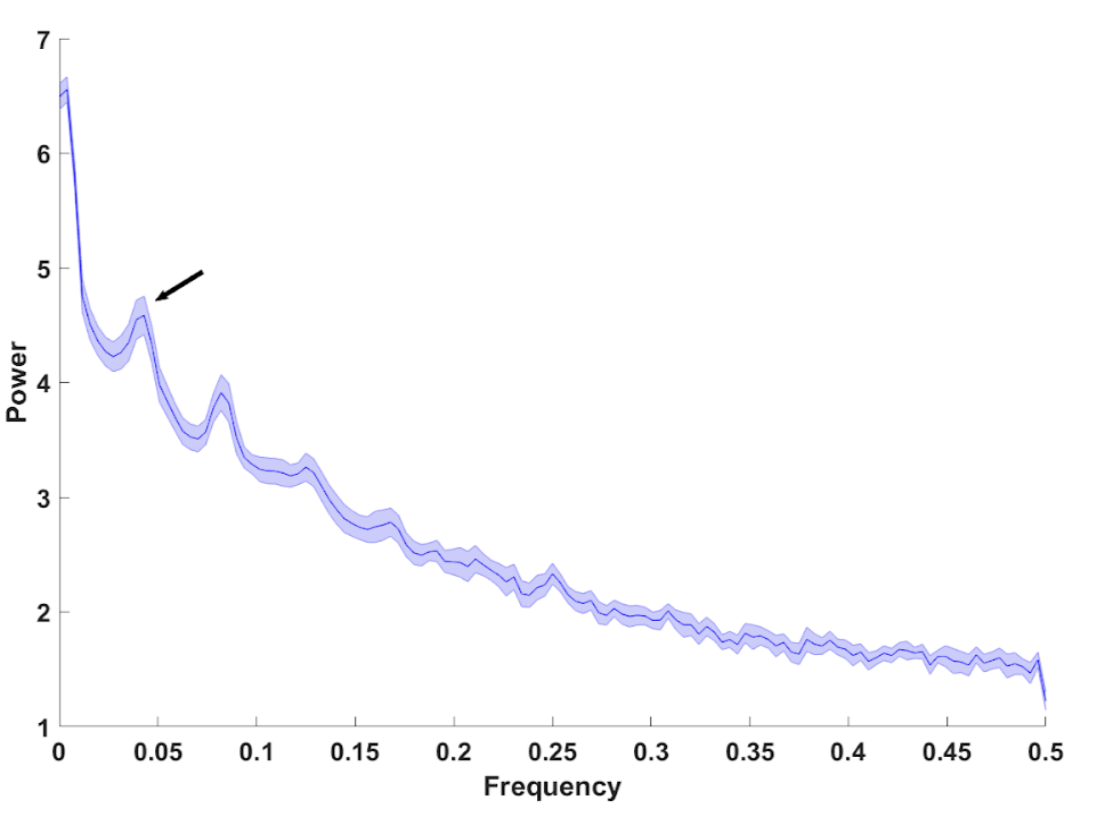
<figure>
  <img src="/assets/images/DelhiPollution/f3.png" alt="Description of image" />
  <figcaption>Figure 3.</figcaption>
</figure>

<p>Figure 3. Is the power spectrum of the AQI time series.The peak indicated by the arrow corresponds to a frequency ~ 0.4.This means that the hourly AQI data may be considered to be a somewhat periodic signal 
with a frequency roughly of 1 cycle every 24 hrs. The sun, in other words, exerts a powerful influence on air quality.</p>

<figure>
  <img src="/assets/images/DelhiPollution/f4.png" alt="Description of image" />
  <figcaption>Figure 4.</figcaption>
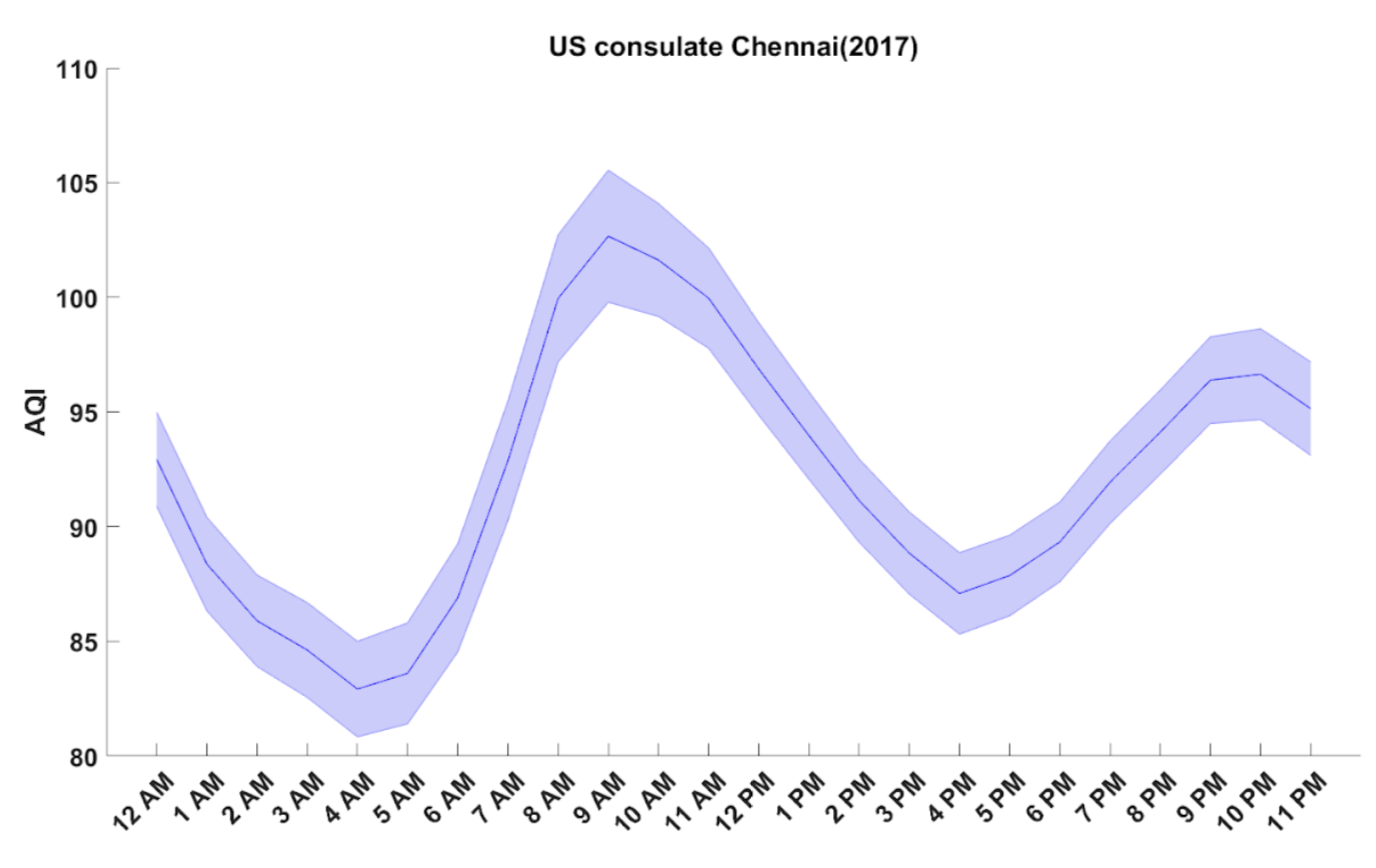
</figure>

<p>Figure 4. Shows the hourly changes in AQI for Chennai. The figure suggests that in addition to the late afternoon dip in AQI, Chennai also experiences another dip in the early morning hours(~ 4AM). This could be due to land breeze effect.</p>

<p>To be continued……..</p>

<p>DATA:</p>

<p>Hourly US EPA AQI(PM 2.5) recorded at the US embassy at Chanakya Puri, New Delhi, India for the year 2016. All data is freely available as csv from the US 
embassy website(https://in.usembassy.gov/embassy-consulates/new-delhi/air-quality-data/)</p>]]></content><author><name></name></author><category term="society" /><summary type="html"><![CDATA[Delhi is the now the most polluted city in the world. During a particularly foul spell of air pollution I decided to make some forays into data analysis and in the process, stumbled upon some interesting insights. As always, it starts withs a histogram]]></summary></entry><entry><title type="html">Dynamical Diseases</title><link href="https://anaghpathak.com/2019/01/22/Dynamical-Diseases/" rel="alternate" type="text/html" title="Dynamical Diseases" /><published>2019-01-22T00:00:00+00:00</published><updated>2019-01-22T00:00:00+00:00</updated><id>https://anaghpathak.com/2019/01/22/Dynamical-Diseases</id><content type="html" xml:base="https://anaghpathak.com/2019/01/22/Dynamical-Diseases/"><![CDATA[<p>There is something gratifying to view a Parkinsonian tremor as a super critical hopf bifurcation.</p>

<p>This point is made in a lecture by the great Steven Strogatz, who while teaching a class on non-linear dynamics at Cornell, likened the tremor associated with parkinson’s disease to a bifurcation leading to the creation of a stable limit cycle. He further speculates that the bifurcation could arise potentially from an alteration in the signal delay in the corresponding neural circuitry which controls the movement of the tremoring hand. For Strogatz, the proposed mechanism reaches beyond mere professional interest, as he goes on to mention how his father suffered from the debilitating consequences of Parkinson’s disease. At an emotional juncture in the otherwise nerdy lecture, Strogatz recounts how his father used to be an avid golfer and tennis player before Parkinson’s struck and, in his own words, ‘messed him up real bad towards the end of his life’. For someone who has family members who’ve gone through the torments of neurological disorders, this was a crucial insight to ponder upon.</p>

<p>It is common knowledge that the brain is an elaborate circuit consisting of spiking units called neurons. Each neuron has the capacity to receive inputs from a multitude of neurons, parse through the contents of those messages and take a decision on whether it needs to pass on that message to other multitude of neurons. This can be likened to a system of pendulums connected through rods or springs. Each pendulum receives mechanical inputs from all the other pendulum(mediated by the spring/rod) and without any delay passes on the information to other pendulum. It is easy to see how the resulting global dynamics cascades. The same goes for neurons, except 1.they don’t convey information continuously and 2. don’t directly pass information back to the neurons they receive information from. Crucial as they seem, but we can safely discount the differences for our purposes. What’s of import here is that, given the system lies in a well defined parameter space, it is capable of displaying interesting deterministic dynamics. Imagine a system of connected pendulum where individual pendulum sways at a phase that is synchronized to some of the other pendulum connected to it. Still further, imagine a scenario where pendulum sway at a fixed frequency in a sequential manner, recruiting more and more pendulum along the chain .Now connect the end point of that chain to a muscle group and what we have is a rudimentary way of moving that hand at a certain desired frequency. Ofcourse, we’ve stripped down this description considerably so that what remains is just the primary intuition.</p>

<p>So in order to achieve a certain desired state, the brain instantiates a circuit that has the desired target as a fixed point of the system. Let’s assume that I’ve asked you to hold your right hand perpendicular to your torso. After listening to my instructions your brain will instantiate a circuit which is connected to the muscles that are responsible for lifting your right hand. Envisioned as a dynamical system, the network configuration that keeps your hand stable in the perpendicular position, would correspond to a stable fixed point of the network dynamical equations. Now, for some reason(pathology, too much coffee etc.), let’s assume that the fixed point loses stability and gives way to a limit cycle solution. What you have now is a low frequency tremor. Hence, we’ve successfully envisioned a clinical syndrome as a bifurcation of a dynamical system. Similar reasoning can be applied to understanding another ‘dynamical disease’ called epilepsy. Due to various reasons like genetic malformation, injury or even dehydration, some networks of the brain lose stability and enter into a hypersynchronous state.</p>]]></content><author><name></name></author><category term="neuroscience" /><category term="biology" /><category term="physics" /><summary type="html"><![CDATA[There is something gratifying to view a Parkinsonian tremor as a super critical hopf bifurcation.]]></summary></entry><entry><title type="html">The Chalming Zombies</title><link href="https://anaghpathak.com/2018/11/25/The-Chalming-Zombies/" rel="alternate" type="text/html" title="The Chalming Zombies" /><published>2018-11-25T00:00:00+00:00</published><updated>2018-11-25T00:00:00+00:00</updated><id>https://anaghpathak.com/2018/11/25/The-Chalming-Zombies</id><content type="html" xml:base="https://anaghpathak.com/2018/11/25/The-Chalming-Zombies/"><![CDATA[<p>Descartes tells us that the only thing we can be sure of is the fact that there exists some entity that is the thinker of this thought. The good news is that, of this we can be very sure. The bad news is that there is nothing and absolutely nothing else in the world that one can be sure of. This makes for a very binary world indeed. A world where we sit on an island of certainty in an infinite ocean of uncertainty.</p>

<p>So let’s assume that other human beings are just feigning consciousness and are actually just simulations, albeit quite vivid ones. They reproduce all the delicate nuances of social behaviour  down to a tee. While talking to you, they demonstrate the existence of rich inner lives that reflect the totality of their life experiences. In as far as one can spot it, they display the existence of joy, sorrow, disbelief, hatred and all the other emotional states that one readily identifies in their own conscious lives. They may even report deep philosophical reflections on the nature of consciousness and some of them may even be professional philosophers of mind. One of them even has a name. He calls himself David Chalmers. David gives out all the signals that make you believe that he is conscious just like you are. Except David is just a vivid illusion and he’s just pretending to be conscious. For what nefarious ends he maintains this act is besides the point. All that matters is that there is nothing like how it feels to be David. In other words, if I could replace every atom of your brain and body with those of David’s then your lights would go out but you in your new avatar would continue to act like David. David is a zombie, albeit a chalming one.</p>

<p>When you confront David with your nagging doubts about his consciousness, far from being displeased, he chimes in with you. He says that if your speculations about his inherent zombieness were indeed correct, that would prove that consciousness didn’t necessarily arise out of cognitive/informational complexity. Even more damaging to your reductionist leanings would be his claim that his lack of consciousness proves that no amount of cognitive insight would bring you close to a possible explanation for consciousness because he possessed the same behavioural repertoire as you and yet you are conscious and he is not.</p>]]></content><author><name></name></author><category term="neuroscience" /><category term="philosophy" /><summary type="html"><![CDATA[Descartes tells us that the only thing we can be sure of is the fact that there exists some entity that is the thinker of this thought. The good news is that, of this we can be very sure. The bad news is that there is nothing and absolutely nothing else in the world that one can be sure of. This makes for a very binary world indeed. A world where we sit on an island of certainty in an infinite ocean of uncertainty.]]></summary></entry><entry><title type="html">Exploration into Meditation: Personal encounters with phenomenology</title><link href="https://anaghpathak.com/2018/11/10/exploration-into-meditation-personal-encounters-with-phenomenology/" rel="alternate" type="text/html" title="Exploration into Meditation: Personal encounters with phenomenology" /><published>2018-11-10T11:56:00+00:00</published><updated>2018-11-10T11:56:00+00:00</updated><id>https://anaghpathak.com/2018/11/10/exploration-into-meditation-personal-encounters-with-phenomenology</id><content type="html" xml:base="https://anaghpathak.com/2018/11/10/exploration-into-meditation-personal-encounters-with-phenomenology/"><![CDATA[<p><u><b>WARNING: The views espoused below are my own. The style of writing may mislead some readers into believing that these views are somewhat authoritative. This particular style of writing was adopted by the author to avoid the unpleasantness of prefacing every sentence with IMO(in my opinion).</b></u></p>

<p>As scientists, we are taught to observe empirical phenomenon. The rationale behind this approach is that repeated observations lead to the identification of patterns, that can then be generalized and framed more formally. Undoubtedly, this is a great exploratory strategy. The caveats are that such observations should be <i>reproducible</i> and sufficiently <i>quantifiable/measurable</i>. Reproduciblity entails that a piece of experimental observation should be general enough to not depend on the specific lab  conditions in which it was conducted. Measurability, requires that a quantum be placed on the degree to which an experimental variable has been recorded. So if a lab in Geneva decimates 1gm of Uranium into its equivalent energy, the same energy can be expected to be released in another lab in Tokyo or if the same is performed in Geneva for a second time. So far so good.</p>

<p>The two criteria of <i>measureability</i> and <i>reproducibilty</i>, seem to preclude any serious scientific study of subjective phenomenal experience(aka consciousness). Surely, conscious events are anything but measurable. So for instance, how is an ounce of anger different from a quart of sadness? Similarly, how do I reproduce 16.2 grams of self awareness in a lab setting ? How do I convey to a lab rat(aka grad student) the level of my bliss when I hear a particularly pleasant piece of music, or my anger at the way somebody parks their car in my parking spot. But, however immeasurable and unreproducible these mental states may appear, they always display a pattern. For if there wasn’t a deterministic pattern to these mental states, how would it have been possible to say the following: ‘If I get a bonus from by boss, I’ll feel happy’.  The prospect of a pay raise is so well correlated with a subsequent sense of ‘happiness’ that it can be predicted with near certainty.  In other words, certain external events can faithfully predict the onset of mental states, however ill-defined those mental states may be under the limitations imposed by measurability and reproducibility. Similarly ,when a depression patient gives a ball by ball account of emotional states that precede the gradual spiral into an unmitigated abyss of sadness, how is it any different from a physicist or  a biologist or an engineer, describing the workings of an atom, a cell or a transistor ? It’s as if these mental states follow a deterministic pattern- a nebulous dynamics. The human being who accurately predicts the onset of ‘happiness’ after a pay raise, has intimately understood a ‘phenomenology’ of a certain kind of mental state, in this case an emotional state.</p>

<p>Meditation is the art of mastering this very phenomenology. The logic is that by sustained practice, the practitioner is able to grasp the patterns that underlie thought processes. He/She begins to recognize thought processes in much the same way as an amateur bird watcher ,who begins to recognize bird species and their behavior. In that sense, meditation is a <b>SKILL</b>. The more you do it and the more intensely you do it, the better you get at it.</p>]]></content><author><name></name></author><summary type="html"><![CDATA[WARNING: The views espoused below are my own. The style of writing may mislead some readers into believing that these views are somewhat authoritative. This particular style of writing was adopted by the author to avoid the unpleasantness of prefacing every sentence with IMO(in my opinion).]]></summary></entry><entry><title type="html">The Code of the Woosters</title><link href="https://anaghpathak.com/2017/02/01/the-code-of-the-woosters/" rel="alternate" type="text/html" title="The Code of the Woosters" /><published>2017-02-01T17:43:00+00:00</published><updated>2017-02-01T17:43:00+00:00</updated><id>https://anaghpathak.com/2017/02/01/the-code-of-the-woosters</id><content type="html" xml:base="https://anaghpathak.com/2017/02/01/the-code-of-the-woosters/"><![CDATA[<p><a href="https://www.goodreads.com/book/show/9858081-the-code-of-the-woosters" style="float: left; padding-right: 20px;"><img alt="The Code of the Woosters (Jeeves, #7)" src="/assets/images/book-covers/code-of-the-woosters.jpg" /></a><a href="https://www.goodreads.com/book/show/9858081-the-code-of-the-woosters">The Code of the Woosters</a> by <a href="https://www.goodreads.com/author/show/7963.P_G_Wodehouse">P.G. Wodehouse</a></p>

<p>My rating: <a href="https://www.goodreads.com/review/show/1869792689">5 of 5 stars</a></p>

<p>At the behest of his aunt, Wooster sets out to recover his Uncle’s cow creamer from the evil duo of Sir Watkin Bassett and his accomplice Roderick Spode. To give you some background, a cow creamer is a collectors item for rich men of sophistication who have plenty of time on their hands. In short, a cow creamer is something you collect if you have time to kill and money to spend. Sir Bassett and Uncle Tom are just the sort of men who have both in plenty. Through the most adroit skulduggery, Sir Watkins has managed to pinch the said item from under Uncle Tom’s nose. It is the said item that Bertie must recover from Totleigh towers lest he is denied entry to Brinkley court dining rooms.</p>

<p>Wooster is at it again as he takes on the retired judge and his dictator man friday. Spode, who happens to be the leader of a fascist organization (that is when he is not busy designing women’s underclothes) intimidates Wooster by threatening him with physical harm if he doesn’t desist from flicking the creamer. Wooster, not one to be browbeaten easily, slithers over to his trusted butler for solutions. Jeeves, never one to let down a master in a pickle, hatches a cunning plan to contain the marauding Spode. Jeeves uses his underground network to dig up dirt on Spode and finds the chink in his armor, namely his past as a ladies tailor. Spode, emasculated thus, serves as a constant comic device throughout the book.</p>

<p>On yet another front, Wooster has to mend Gussie’s relationship with Madeleine lest he has to replace Gussie as the groom. He is daunted in his efforts by Gussie’s doltishness. Yet again, Gussie, in order to overcome his fear of the pulpit, resorts to measures of the most extreme nature. On Jeeves’ urging, he has been maintaining a journal that contains incriminating rants against Sir Watkins. Gussie, in a fit of, well, being himself, looses the diary which subsequently falls into the hands of Stiffy, Sir Watkins’ niece. Needless to say, mayhem ensues.</p>

<p>Wodehouse is the consummate master at work as he lays out a knotty plot interspersed with sentences that split the reader at the sides. Living up to the Wooster code Wodehouse never lets a pal down !</p>

<p><a href="https://www.goodreads.com/review/list/9767799-anagh">View all my reviews</a></p>]]></content><author><name></name></author><category term="Book Review" /><summary type="html"><![CDATA[The Code of the Woosters by P.G. Wodehouse]]></summary></entry><entry><title type="html">Right, Ho Jeeves !!</title><link href="https://anaghpathak.com/2016/12/27/right-ho-jeeves/" rel="alternate" type="text/html" title="Right, Ho Jeeves !!" /><published>2016-12-27T09:20:00+00:00</published><updated>2016-12-27T09:20:00+00:00</updated><id>https://anaghpathak.com/2016/12/27/right-ho-jeeves</id><content type="html" xml:base="https://anaghpathak.com/2016/12/27/right-ho-jeeves/"><![CDATA[<p><a href="https://www.goodreads.com/book/show/9850375-right-ho-jeeves" style="float: left; padding-right: 20px;"><img alt="Right Ho, Jeeves (Jeeves, #6)" src="/assets/images/book-covers/right-ho-jeeves.jpg" /></a><a href="https://www.goodreads.com/book/show/9850375-right-ho-jeeves">Right Ho, Jeeves</a> by <a href="https://www.goodreads.com/author/show/7963.P_G_Wodehouse">P.G. Wodehouse</a></p>

<p>My rating: <a href="https://www.goodreads.com/review/show/1852083741">5 of 5 stars</a></p>

<p>From the dining halls of Brinkley court comes a story of love, friendship and newts told by the greatest British comic writers of all time. To quote one of the principal protagonist, this story is <i>“fraught with interest”</i>.</p>

<p>Trust Bertie Wooster to mess things up. Wooster descends upon Brinkley court with the explicit intention of mending broken hearts and purses. Needless to say, he fails spectacularly at both and antagonizes one and all in the process. The goofy Wooster takes up the arduous task of “fixing up” the even goofier Gussie Fink-Nottle with the goofiest Madeleine Bassett. What ensues is utter carnage as ‘Spink-Bottle’ can’t get past his passion for newts while professing his love for her. In a bid to wriggle out of his duties, Wooster tasks the hapless Gussie with making a speech at the Market Snodsbury Grammar School. What follows is a <i>tour de force</i> of comic writing as Gussie(a teetotaler up until then), to counter a case of the butterflies, gulps down copious amounts of alcohol right before the speech.</p>

<p>On another front, Wooster, with his wondrous instinct for the regrettable takes upon himself the task of reconciling Tuppy and Angela much to the consternation of Aunt Dahlia. As is often the case, the plan backfires, causing needless enragement, estrangement and engagement. Faced with disaster on all fronts, Bertie grudgingly yields to his Butler’s superior intellect who promptly fixes the situation leaving Bertie yet again in his debt.</p>

<p>This book contains the finest vignettes of comic writing ever to be put on paper. A must-read for anyone who aspires to be humorous.</p>

<p><a href="https://www.goodreads.com/review/list/9767799-anagh">View all my reviews</a></p>]]></content><author><name></name></author><category term="Book Review" /><summary type="html"><![CDATA[Right Ho, Jeeves by P.G. Wodehouse]]></summary></entry></feed>