Research
Selected Papers
My most cited work, according to Google Scholar, plus recent highlights.
-
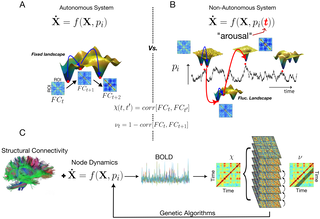 Arousal-driven critical roaming reproduces human functional connectivity dynamics
We show that slow fluctuations in arousal, modeled as stochastic changes in cortical excitability and neural gain, let connectome-based brain models roam across critical regimes and reproduce the fat-tailed statistics of empirical functional connectivity dynamics far better than models without arousal-driven variability.
-
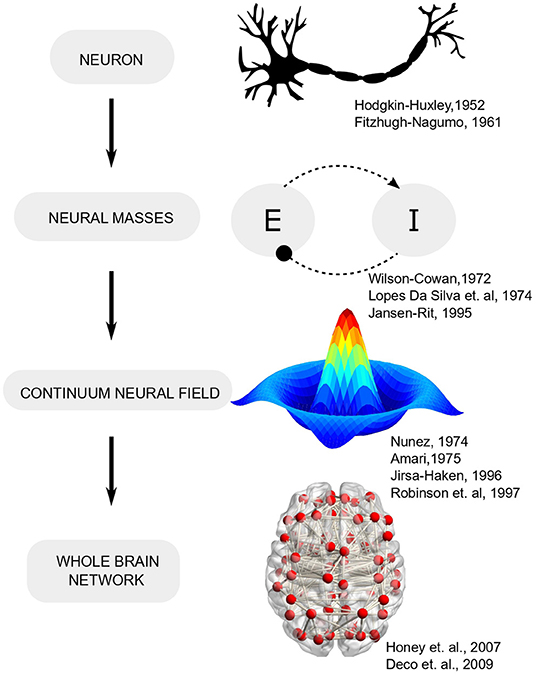 Whole-Brain Network Models: From Physics to Bedside
A review of the field of large-scale whole-brain computational models, tracing how physics-based approaches to neural dynamics are increasingly finding translational application at the clinical bedside.
-
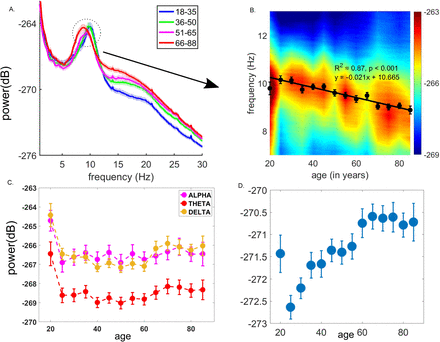 Lifespan associated global patterns of coherent neural communication
Using resting-state MEG recorded across the adult lifespan, we show that the global coherence and metastability of neural oscillations track healthy brain aging, offering compact markers of large-scale change in neural communication.
-
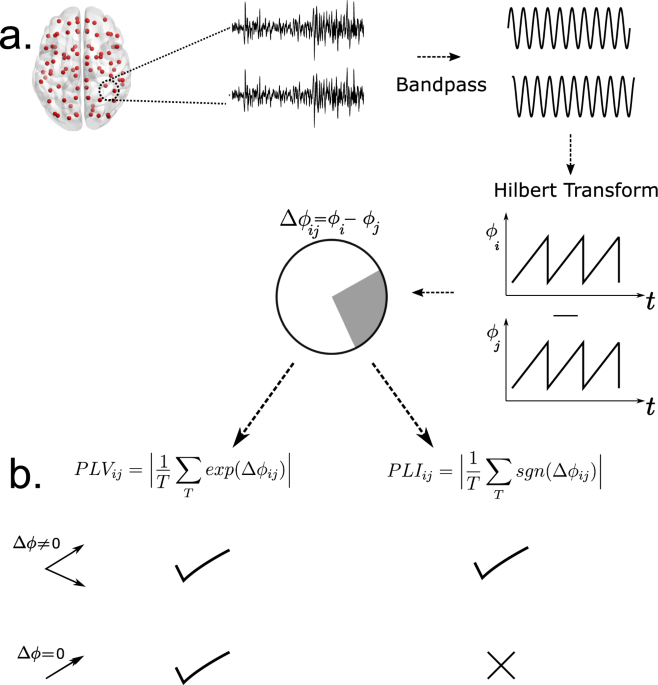 Biophysical mechanism underlying compensatory preservation of neural synchrony over the adult lifespan
We combine dynamical systems modelling with MEG analysis to show that global synaptic scaling compensates for age-related white matter decline, preserving neural synchrony at the peak alpha frequency across the adult lifespan.
-
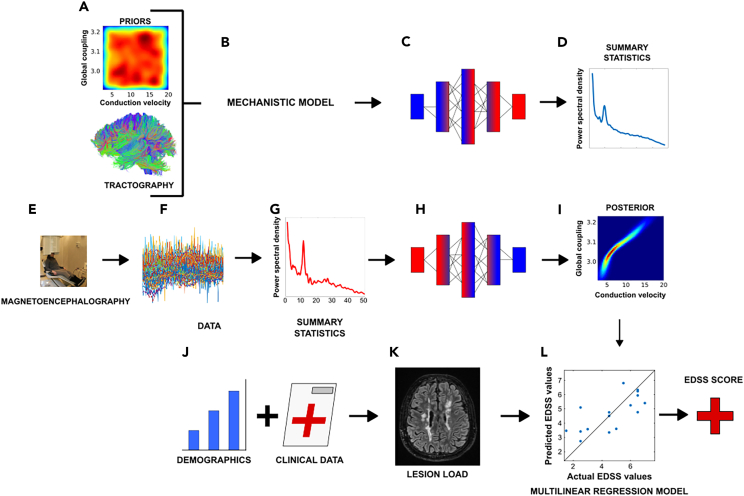 The virtual multiple sclerosis patient
We integrate diffusion tensor imaging and MEG into individualized virtual brain models to estimate conduction velocities in MS patients versus controls, offering a route past the clinical-radiological paradox that standard tract-specific measures miss.
-
Automatic seizure detection by modified line length and Mahalanobis distance function
We modify the classical line-length feature for seizure detection and combine it with a Mahalanobis-distance classifier across multichannel intracranial EEG, improving seizure-detection accuracy on the Freiburg dataset without added computational cost.
-
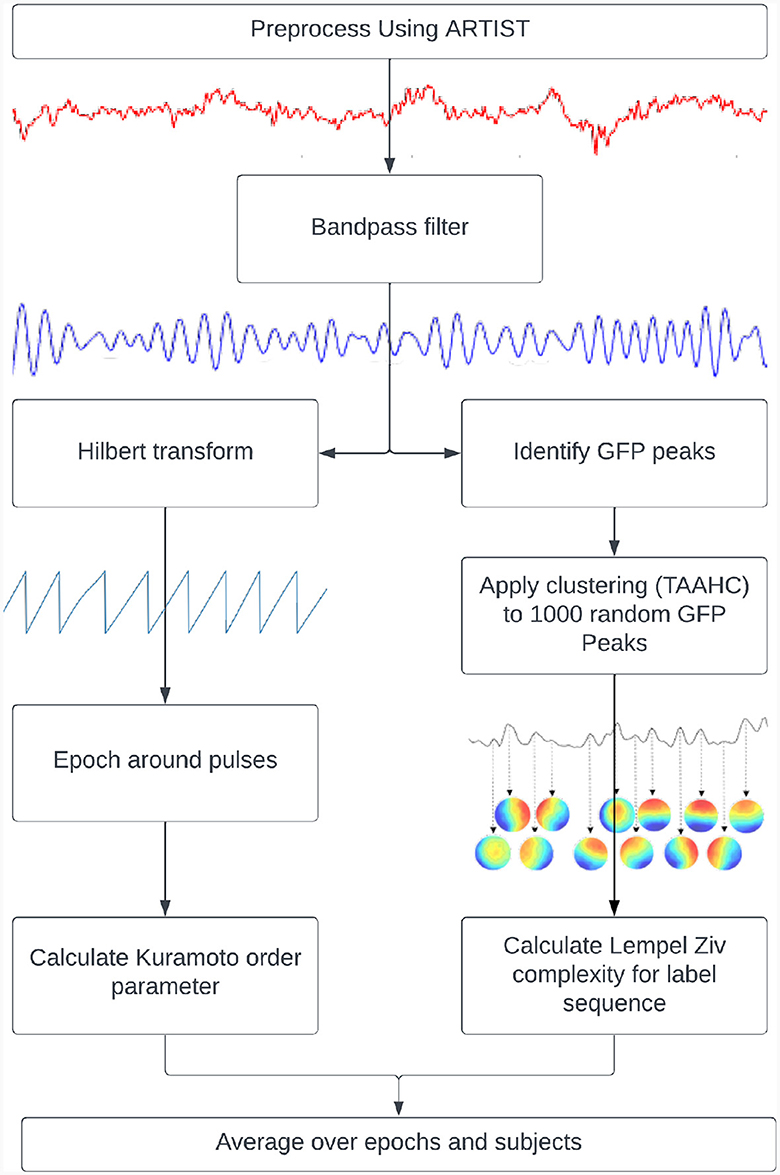 Metastability indexes global changes in the dynamic working point of the brain following brain stimulation
We characterize how single-pulse TMS transiently reduces metastability and increases coherence in global brain network dynamics, with higher EEG frequencies recovering faster than lower ones, offering a way to quantify how long stimulation effects linger.
-
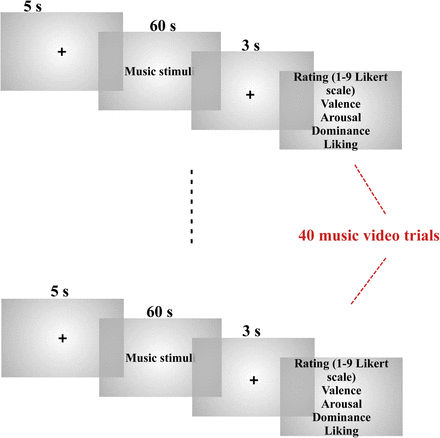 Emotion arousal but not valence is strongly represented in aperiodic EEG activity stemming from thalamocortical interactions
Using the DEAP dataset, we find that the aperiodic EEG exponent and offset track emotional arousal but not valence, and use a thalamocortical neural field model to show this stems from enhanced inhibitory coupling between thalamic reticular and relay populations.
-
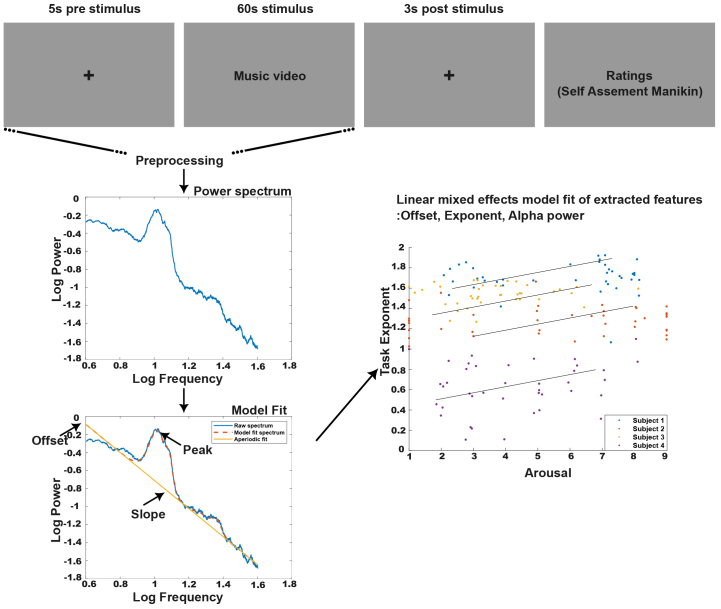 Inhibition of thalamic relay nuclei scales the aperiodic and alpha band oscillations associated with arousal during naturalistic stimulus viewing
We show that arousal during naturalistic viewing is tracked by a rise in the aperiodic EEG exponent/offset and a drop in alpha power, and use a corticothalamic neural field model to trace both effects to stronger inhibitory drive onto thalamic relay nuclei.